
The 2025 Indian Solar Storage Report: A Definitive Investment Analysis

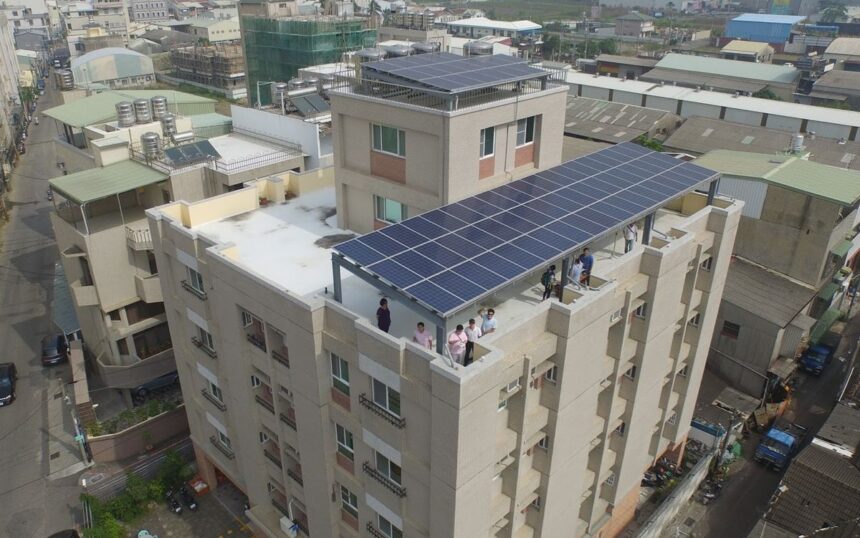
In 2025, the Indian solar storage market has arrived at a critical inflection point. The convergence of aggressive government policy, plummeting battery costs, and a maturing technological landscape has fundamentally altered the investment equation for homeowners and businesses. While grid-connected (on-grid) solar photovoltaic (PV) systems remain the superior short-term financial investment—driven by the massive subsidies of the PM Surya Ghar Muft Bijli Yojana —the investment case for adding battery storage has shifted from a niche luxury to a strategic imperative.
The technology war, for all practical purposes, is over. Lithium Iron Phosphate (LFP) has emerged as the undisputed winner for residential and commercial applications, not merely on performance metrics but on the far more critical metric of total cost of ownership (TCO). The legacy lead-acid battery, while cheaper at the point of purchase, has been rendered financially obsolete by LFP’s superior lifespan, safety, and usable capacity.
This report will demonstrate that evaluating a solar battery on “simple payback” is a flawed approach. The data shows this calculation, which can exceed 17 years for a hybrid system , fails to capture the asset’s true value. Instead, the 2025 investment thesis for solar storage is built on a “Three-Pillar” value model:
- Peace of Mind: The non-financial, high-impact value of reliable, 24/7 power and independence from a volatile grid.
- Price Protection: The battery as a long-term financial hedge, locking in energy costs for 15+ years against a backdrop of “costlier” grid tariffs.
- Performance: The emerging, direct financial return from “energy arbitrage”—storing free solar energy to offset expensive peak-hour grid power.
The question for 2025 is no longer if LFP batteries are the right choice, but why a specific consumer is investing. This report deconstructs that “why” for every key market segment, providing a definitive analysis of which storage solutions are worth the investment today.
Part 1: The 2025 Market Landscape: Policy and Price Collisions
To understand the residential investment case, one must first analyze the macroeconomic forces shaping the entire Indian energy storage sector. In 2025, this landscape is defined by a massive utility-scale boom that is creating powerful tailwinds for the residential market, even as government policy bifurcates the consumer’s investment decision.
1.1 India’s Storage Revolution: A Tale of Two Markets
At first glance, the 2025 market data appears contradictory. The first half of 2025 saw a significant slowdown in new installations, with a 74% year-on-year plunge, totaling only 48.4 MWh to 49 MWh of new capacity added.
However, this headline figure is dangerously misleading and obscures the true market trajectory. This “slowdown” is not a symptom of failing demand; it is a symptom of an execution bottleneck in a market struggling to keep up with its own explosive growth.
The deeper reality is found in the project pipeline:
- Despite the H1 dip, total cumulative installed energy storage capacity reached 490 MWh by June 2025.
- In the first half of 2025, government agencies issued over 16 GW of energy storage tenders and auctioned more than 9 GW of projects.
- Crucially, solar-plus-storage tenders surged by an astounding 381% year-on-year in the same period.
The disparity is stark: between 2022 and May 2025, India auctioned approximately 12.8 GWh of battery energy storage system (BESS) capacity, but only 219 MWh is reported as operational. The market is not shrinking; it is choked by “delays in power purchase agreements and transmission interconnection”.
For the residential investor, this utility-scale boom is the most important context. The government’s Viability Gap Funding (VGF) scheme, valued at Rs. 5,400 crore for 30 GWh of BESS , and massive private capital expenditure plans, such as Waaree Energies’ Rs. 8,175 crore plan to expand its BESS capacity to 20 GWh , are financing the creation of a vast domestic manufacturing ecosystem. This industrial-scale investment de-risks the supply chain and will create the economies of scale needed to continue pushing down residential battery prices, regardless of specific residential demand.
1.2 The PM Surya Ghar Catalyst: Creating a “Battery-Ready” Nation
The second major force is the Pradhan Mantri Surya Ghar Muft Bijli Yojana (PMSGY), launched in 2024. This scheme, with a total outlay of over ₹75,000 crore, aims to install rooftop solar in 1 crore (10 million) households and has been a resounding success in driving adoption. It has transformed the residential solar segment, adding 4.9 GW in its first year and accounting for 77% of all rooftop solar capacity additions in Q1 2025.
However, a critical clarification is required for the storage investor: PMSGY is a solar subsidy, not a battery subsidy.
The Central Financial Assistance (CFA) is explicitly for the grid-connected solar system. The subsidy is ₹30,000 per kW for the first 2 kW and a fixed total of ₹78,000 for systems 3 kW and above. This subsidy is calculated based on the solar module capacity or the inverter capacity (whichever is lower) and does not cover the additional cost of a battery bank.
The true role of PMSGY in the storage market is therefore indirect, but profoundly powerful. By heavily subsidizing the panels, the scheme makes the initial on-grid solar installation a high-return, fast-payback (3-7 years) financial “no-brainer”. In doing so, it is creating a massive, nationwide installed base of “battery-ready” homes.
The scheme effectively “pre-wires” the nation for a storage boom. The government, perhaps unintentionally, has bifurcated the investment decision:
- The Panels: A subsidized, mainstream, high-ROI financial investment.
- The Battery: An unsubsidized, premium lifestyle or security purchase.
This report’s analysis is crucial for helping consumers bridge this artificial-but-real psychological and financial barrier.
1.3 The New Price Reality: The 50% Plunge and What It Means
The final market driver is the dramatic 2024-2025 battery price “discharge.” Globally, battery pack prices fell by nearly 50%, dropping from approximately $115/kWh in December 2024 to $55/kWh by May 2025, according to an SBI Capital Markets report.
This global price collapse has reached India, though local prices remain slightly higher at $70-$80/kWh. This trend is the single most important factor making the 2025 storage investment viable.
However, consumers must understand the “pack-to-system” price gap. A homeowner cannot purchase a 10 kWh battery for $700-$800. The pack is just one component. The final residential system cost, which includes the Battery Management System (BMS), a hybrid inverter, thermal management, safety casing, GST, import duties, and the installer’s margin, is significantly higher.
Data from 2025 shows residential system-level costs are:
- ₹18,000 – ₹30,000 per kWh for a complete lithium-ion system.
- ₹36,000 – ₹60,000 for a 200Ah (approximately 2.4 kWh) LFP battery.
This ~3x markup from pack to system is standard. The key takeaway for the investor is not the absolute price, but the trend. The 50% drop in the core component is what makes the system-level price achievable and signals continued downward pressure.
This “sharp reduction in tariffs” and “concerns of underbidding” in the utility sector suggest a market in rapid, almost chaotic, price discovery. For a homeowner, this creates a “wait-and-see” dilemma: “If I buy today, will the price be 20% lower in six months?” This paralysis is a real barrier. The only way to combat it is to shift the consumer’s focus from the volatile upfront cost to the stable total cost of ownership (TCO).
Part 2: The Technology Showdown: Why 2025 is the Year of LFP
The query “which storage solutions” implies a choice. In 2025, this choice is a ilusion. The technical and financial data overwhelmingly concludes that Lithium Iron Phosphate (LFP) is the only viable investment for residential solar. The legacy tubular lead-acid battery, while still sold, represents a false economy.
2.1 The End of the Lead-Acid Era: A Post-Mortem
The sole advantage of a tubular lead-acid battery is its low upfront cost. A 200Ah lead-acid battery costs between ₹16,000 and ₹23,000, while its 200Ah LFP counterpart costs ₹36,000 to ₹60,000. This is where its advantages end.
The fatal flaws of lead-acid technology make it a poor financial liability:
- High Maintenance: Lead-acid batteries require regular, active maintenance, including topping up with distilled water and cleaning terminals.
- Short Lifespan: They are rated for 400-1,500 cycles , translating to a real-world usable life of just 3-6 years, after which they must be replaced.
- Low Efficiency: Lead-acid batteries suffer from poor efficiency, which can be less than 70%. This means 30% or more of the solar energy stored is lost as heat during the charge/discharge process.
- Hazardous: The technology is inherently hazardous, containing corrosive sulfuric acid (presenting leak and burn risks) and toxic lead.
The “maintenance-free” nature of LFP is more than a convenience; it is a critical financial variable. Real-world use, “poor maintenance tracking procedures,” or simple user neglect will “significantly reduce” the already-short lifespan of a lead-acid battery. In a residential “fit-and-forget” context, it is almost guaranteed that a lead-acid battery will not reach its rated life. LFP, by contrast, delivers its rated performance with zero user intervention, making its TCO far more reliable and predictable.
2.2 The LFP Value Proposition: A Deep Dive
LFP’s superiority is built on three technical pillars that directly translate to financial value.
Pillar 1: Myth-busting Capacity (Depth of Discharge – DoD) Depth of Discharge (DoD) is the percentage of a battery’s total energy that can be safely used without shortening its lifespan.
- Lead-Acid: Has a recommended DoD of ~50%. Regularly discharging it further (e.g., to 80%) will drastically shorten its life, reducing it to just 300-750 cycles.
- LFP: Has a usable DoD of 80-100%.
This is the most critical concept for consumers to understand, as it completely reframes the upfront cost. A 10 kWh LFP battery is NOT equal to a 10 kWh lead-acid battery.
To get 50 kWh of usable energy, a user must buy a 100 kWh nominal lead-acid battery (at 50% DoD) but only a 50-60 kWh nominal LFP battery (at 80-100% DoD). An LFP battery provides 1.5 to 2 times the usable energy of a similarly rated lead-acid battery. The LFP battery is not 2x the price for the same capacity; in many cases, it is a similar price for double the usable energy.
Pillar 2: Cycle Life & Longevity The disparity in lifespan creates a TCO inversion.
- Lead-Acid: 400-1,500 cycles.
- LFP: 2,000-6,000+ cycles.
At one full cycle per day (a standard assumption for a solar home), the math is brutal. A 1,000-cycle lead-acid battery will be dead in under 3 years. A 6,000-cycle LFP battery will last over 15 years.
This means over the 15-year life of the solar system, the homeowner will buy one LFP battery or five lead-acid batteries. This single fact flips the entire investment case.
Pillar 3: Safety & Climate Suitability (The India-Specific Argument) This is the definitive, localized argument. LFP chemistry has “great thermal stability” , “does not catch fire or burn when punctures” , and handles heat far better than lead-acid.
Lead-acid performance, by contrast, “depends largely on ambient temperature”. “Extreme heat… can significantly reduce the life of a lead acid battery”. An academic study comparing battery life in different climates confirmed this, showing a lead-acid battery in a hot climate (Tindouf) had less than half the lifespan of one in a cool climate (Pyrenees) (5 years vs. 12 years).
India is a hot country. This means all the poor lifespan metrics cited for lead-acid batteries are, in fact, optimistic. The Indian climate will accelerate their degradation. LFP’s superior thermal stability means it will perform reliably closer to its rated specs, making the TCO gap even wider in the real world.
2.3 The TCO Verdict: A Comparative Financial Model
When these technical factors are synthesized into a financial model, the conclusion is unambiguous. The following table models the Total Cost of Ownership (TCO) to achieve 5 kWh of usable energy over a 10-year horizon.
Table 1: Total Cost of Ownership (TCO) Analysis: 5 kWh Usable Energy (10-Year Horizon)
| Metric | Tubular Lead-Acid | Lithium Iron Phosphate (LFP) | Source / Rationale |
| Required Usable Energy | 5 kWh | 5 kWh | Mandate |
| Required Nominal Capacity | ~10 kWh (at 50% DoD) | ~6 kWh (at 80% DoD) | [3, 33, 34] |
| Upfront Cost (Est.) | ~₹80,000 – ₹92,000 | ~₹1,50,000 (at ₹25,000/kWh) | [4, 22, 41] |
| Cycle Life (at 80% DoD) | ~300-750 cycles | ~3,000-5,000 cycles | |
| Expected Lifespan (Daily Use) | ~2-3 years | ~8-13 years | |
| Required Replacements (10-Yr) | 3-4 | 0 | Calculation |
| Maintenance Cost (10-Yr) | High (distilled water, labor) | None | |
| Total 10-Year Cost (Est.) | ~₹2,40,000 – ₹3,68,000+ | ~₹1,50,000 | Calculation |
The analysis is stark. The LFP solution is 1.6x to 2.4x cheaper over a single decade, and this does not even factor in the cost of labor for maintenance or the energy losses from lead-acid’s poor efficiency. Other analyses confirm this, calculating the total cost per usable kWh is approximately 2.8 times cheaper for a lithium-based solution.
2.4 Enabling Hardware: The Unsung Hero
The battery, however capable, is useless without a “brain.” The investment in storage is equally an investment in a smart, hybrid inverter. In 2025, these inverters are no longer passive components but “active grid participants”.
New product lines, such as GoodWe’s EcoSmart Home portfolio (including the ES Uniq and ET LV Series), are marketed as “intelligent, flexible solar-plus-storage systems”. These systems are designed from the ground up for seamless LFP integration (e.g., with the Lynx A G3 battery), scalability (allowing up to six inverters in parallel), and enhanced safety features like Arc Fault Circuit Interrupters (AFCI).
This hardware is the critical bridge connecting the PMSGY boom to the storage boom. A savvy installer, advising a homeowner taking advantage of the PMSGY subsidy, will recommend an on-grid system powered by a hybrid inverter. This makes the home “plug-and-play” for a battery in “Phase 2,” allowing the homeowner to add storage later without needing to replace their expensive, core hardware. The hybrid inverter is the technological and financial bridge from the current solar boom to the future storage boom.
Part 3: The Investment Thesis: Re-evaluating “Return on Investment”
With the technology question settled on LFP, the analysis must confront the primary objection to batteries: the long simple-payback period. This section will argue that this is a flawed metric and propose a new, three-pillar value model more appropriate for a hybrid asset.
3.1 The Payback Problem: Acknowledging the 17-Year Hurdle
The hard truth cannot be avoided. When measured by “simple payback,” an on-grid solar system is a far superior short-term investment.
- On-Grid (No Battery): Payback is typically 3-7 years. This is a clear, high-return financial investment.
- Hybrid (With Battery): A 5 kW solar system with a 10 kWh battery, costing approximately ₹5.2 lakh, with annual savings of ~₹30,000, has a simple payback period of ~17 years.
A 17-year payback represents a ~5.8% ROI, which is not a compelling financial return on its own. This report must be credible in acknowledging this.
However, the simple payback model is fundamentally the wrong metric for a resilience asset. No one calculates the “simple payback” on their home insurance policy or their car’s airbags. A battery is a hybrid asset: it is part-financial instrument and part-resilience infrastructure. The “backup value” is non-linear and difficult to quantify in a simple payback model. What is the financial cost of a lost day of work-from-home? What is the value of preventing appliance damage from the “horrible” voltage swings (180-250V) reported in some areas? The simple payback model fails to capture this value.
3.2 The “Three-Pillar” Value Model for 2025
A more accurate framework to evaluate a battery’s “worth” is based on three distinct value streams.
Pillar 1: Peace of Mind (Backup / Insurance Value) This is the primary driver for many homeowners. It is the value of 24/7 power, energy independence, and reliability in the face of “frequent power cuts”. This is an investment in lifestyle and has been shown to increase a property’s overall value.
Furthermore, for any homeowner or business currently reliant on a diesel generator (DG), this “peace of mind” value becomes an immediate and powerful financial value. DG backup power is expensive, costing ₹30–₹50 per unit. Stored solar power, with a levelized cost of ₹2–₹4 per unit, is an order of magnitude cheaper. For this user, the ROI is not compared to the grid; it is compared to the DG, and the payback is immediate.
Pillar 2: Price Protection (Hedge Value) This is the long-term financial value. Grid tariffs “keep getting costlier” , and “rising tariffs make solar + battery systems more valuable every year”.
A 15-year LFP battery is an investment in price certainty. The homeowner is effectively locking in a large portion of their energy costs for the next 15 years, immunizing them against future utility tariff hikes. The 17-year payback calculation is a static model based on today’s tariffs. If tariffs rise by just 5% annually, that 17-year payback shortens dramatically. The battery is, therefore, a hedge against energy inflation.
Pillar 3: Performance (Arbitrage Value) This is the emerging financial value, turning the homeowner into a “prosumer.” This is the value of “energy arbitrage”—the ability to store free, self-generated solar energy at noon and use it during peak evening hours, avoiding the purchase of expensive grid power.
This is becoming more relevant as the “duck curve” (a phenomenon where high midday solar generation crashes grid demand, only for it to spike as the sun sets) becomes more pronounced in India. As utilities respond with Time-of-Use (TOU) tariffs, this arbitrage potential, estimated at ₹2.5-₹3 per kWh , will provide a direct, calculable financial return that is entirely separate from the battery’s backup value.
3.3 Investment vs. Lifestyle Purchase: The Final Verdict
The data leads to a clear, nuanced conclusion for 2025: The panels are the investment; the battery is the upgrade.
The on-grid solar system, supercharged by the PMSGY subsidy , is a “mainstream, not a luxury” product. It is an “economic right” with a rapid 3-7 year payback. This is the pure financial investment.
The battery, with its high unsubsidized cost and long simple-payback , is a premium upgrade that adds the “Three Pillars” of value: security, price hedging, and future performance. It is an investment in a “green lifestyle” and, more importantly, in energy security and independence.
Part 4: Final Recommendations: Segmented Investment Strategies for 2025
The answer to the query “Which solutions are worth the investment?” is not universal. The optimal strategy depends entirely on the consumer’s profile, location, and definition of “value.”
4.1 For the Urban Homeowner (Reliable Grid)
- Profile: Lives in a metro or urban area where power cuts are rare and brief. The primary motivation is lowering high electricity bills.
- Recommendation:
- Install an on-grid solar system immediately. Maximize the 3 kW+ PM Surya Ghar subsidy to get the fixed ₹78,000 CFA.
- Crucially: Ensure the installer uses a hybrid inverter. This minimally higher upfront cost future-proofs the entire system.
- Battery Verdict: A battery is “worth the investment” as a Phase 2 upgrade, not as a Phase 1 financial tool. It is a “lifestyle upgrade” and a long-term hedge against rising tariffs. The investment is in LFP technology, but the timing can be delayed until the solar loan is paid off or when local Time-of-Use tariffs make arbitrage financially attractive.
4.2 For the Rural/Tier-2 Homeowner (Unreliable Grid)
- Profile: Faces “horrible” electric reliability , frequent and long power cuts , significant voltage swings, and may be currently reliant on a noisy, expensive diesel generator.
- Recommendation: A hybrid or off-grid solar-plus-storage system is essential.
- Battery Verdict: An LFP battery is an immediate and powerful financial investment. The 17-year payback model is irrelevant. The baseline for comparison is not the grid; it is the diesel generator. At a cost of ₹30-₹50 per unit , the LFP battery (charged with free solar) replaces this expensive, high-maintenance, and polluting asset. The payback is immediate and financial. For this user, the superior TCO of LFP (from Part 2) makes it the only solution “worth the investment.”
4.3 For the Savvy Prosumer (The Arbitrage Investor)
- Profile: Technologically adept, lives in an area with Time-of-Use (TOU) tariffs (or expects them soon), and wants to maximize the financial return of their asset.
- Recommendation: A fully integrated smart energy system (e.g., GoodWe EcoSmart) with a programmable hybrid inverter and an appropriately sized LFP battery.
- Battery Verdict: Worth the investment. This user will “stack” all three pillars of value: Peace of Mind (backup), Price Protection (hedging), and Performance (actively “trading” energy via arbitrage). This is the user who will, in practice, beat the 17-year simple payback by extracting maximum, active value from their asset.
4.4 Concluding Analysis: The Tipping Point is Here
This report concludes that the “which solution” part of the query is, unequivocally, Lithium Iron Phosphate (LFP). Its superior TCO, safety, and lifespan have made lead-acid technology an unviable “investment.”
The “worth the investment” part of the query depends entirely on the user’s definition of “value.”
In 2025, the market is defined by two powerful, parallel forces:
- The financial pull of the PM Surya Ghar scheme , which is creating millions of solar-ready homes by subsidizing the “financial” part of the system.
- The technical push of mature LFP technology and plummeting pack prices , which has made the “upgrade” part of the system viable, safe, and long-lasting.
The battery is no longer a niche, high-risk product. It is a mature, reliable asset. The investment is no longer a simple financial calculation but a strategic choice in favor of security, price stability, and, ultimately, energy independence.