
Solar Panel Recycling & Sustainable End-of-Life Planning for Your Installation (India Focus)

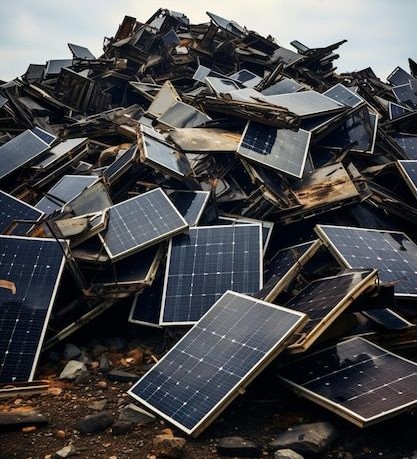
This report delivers an expert-level analysis of the solar panel recycling landscape and end-of-life (EoL) planning framework in India. The central thesis is that the narrative surrounding solar waste has undergone a fundamental, legally binding shift. With the notification of the E-Waste (Management) Rules, 2022 1, and the subsequent 2025 draft Central Pollution Control Board (CPCB) guidelines 3, India has moved definitively from treating solar waste as a theoretical future problem to managing it as a current and mandatory compliance regime.
The implementation of an Extended Producer Responsibility (EPR) framework for solar photovoltaic (PV) modules, panels, and cells—now legally classified as e-waste category ‘CEEW 14’ 3—has shifted the primary legal and financial responsibility of EoL management from the end-user (consumer or installer) to the producer (defined as the manufacturer or importer).4
This report argues that sustainable EoL planning is no longer a disposal problem to be solved in 25 years. Instead, it has become a procurement and due diligence problem that must be solved on Day 1. The most critical EoL decision an installer or asset owner will make is selecting a panel manufacturer with a transparent, robust, and legally compliant EPR take-back program.
This analysis will examine the scale of India’s impending solar waste challenge, the high-value materials locked within panels, the environmental risks of improper disposal, the specific legal obligations for all stakeholders under the new rules, and the technical recycling processes that underpin India’s emerging circular economy for PV materials. The report concludes with an actionable playbook for installers, developers, and prosumers to navigate this new regulatory landscape and ensure their solar installations are sustainable from cradle to grave.
Part 1: The Coming Wave: Sizing India’s Solar Waste Challenge
This section quantifies the scale of the impending waste crisis, deconstructs the solar panel to identify both its hazards and its value, and establishes the strategic-economic imperative for a domestic circular economy.
1.1 A Green Tsunami: Projecting End-of-Life Volume
The rapid, large-scale deployment of solar power, while critical for India’s energy transition, is creating a massive future waste stream. As of Fiscal Year 2023, India’s installed 66.7 GW capacity had already generated approximately 100 kilotonnes (kt) of waste, primarily from early-life failures, transport damage, and weather events.4
This figure is projected to escalate dramatically. Analysis indicates that India will generate a cumulative waste of around 600 kt by 2030.7 Other independent estimates project a similar volume, forecasting 600,000 tonnes (600 kt) by 2040.4 The long-term forecast is even more stark: the volume is expected to increase 32-fold between 2030 and 2050, resulting in approximately 19,000 kt of cumulative waste by 2050.7
This waste will not be evenly distributed. By 2030, a projected 67% of this waste will be concentrated in five key states: Rajasthan (accounting for 24%), Gujarat (16%), and Karnataka (12%), followed by Andhra Pradesh and Tamil Nadu.7 This geographic concentration highlights the urgent need for localized collection and recycling infrastructure in these specific, high-density solar regions.
This trend is part of a global challenge. The International Renewable Energy Agency (IRENA) projects a global cumulative PV waste stock of 78 million tonnes by 2050.8 By the 2050s, the annual global PV waste generated (5.5-6 million tonnes) could nearly match the mass of new panels being installed.10
A critical factor in these projections is the source of the waste. The waste generated by 2030 will largely (56%) come from existing capacity.7 This share is projected to increase to 74% by 2040.7 This data points to a significant regulatory and logistical milestone. India’s solar boom was formally kickstarted by the Jawaharlal Nehru National Solar Mission (JNNSM) launched in 2010.11 With an average panel lifespan of 25-30 years 4, the first massive wave of installations from the JNNSM’s initial phases (2010-2015) will begin reaching its mass end-of-life between 2035 and 2040.
This timeline is not a coincidence; it is the basis for key provisions in the new environmental regulations. The E-Waste (Management) Rules, 2022, specifically mandate that producers must “store solar photo-voltaic modules or panels or cells waste generated up to the year 2034-2035”.1 This 2035 date is a clear regulatory line-in-the-sand, timed precisely to coincide with the expected retirement of the first major wave of JNNSM panels. It effectively gives the nascent domestic recycling industry a decade to build capacity before the first true “tsunami” of EoL panels hits the waste stream.
Table 1: India’s Cumulative Solar Waste Projections (2023-2050)
| Year | Cumulative Waste (Kilotonnes) | Primary Source of Waste (as % of total) |
| 2023 | 100 kt | Early failure / Existing capacity 7 |
| 2030 | 600 kt | 56% from existing capacity 7 |
| 2040 | ~10,000-12,000 kt (projected) | 74% from existing capacity 7 |
| 2050 | 19,000 kt | 77% from new capacity (deployed post-2030) 7 |
1.2 Anatomy of a Solar Panel: Hazards vs. High-Value Assets
To plan for EoL, it is essential to understand a panel’s composition. A typical crystalline-silicon (c-Si) panel, which dominates the market, is composed primarily of non-hazardous materials. By weight, it consists of approximately 76% glass, 10% plastic polymer (encapsulant and backsheet), 8% aluminum (frame), 5% silicon (cells), 1% copper (wiring and ribbons), and less than 0.1% other metals.16
Despite their benign bulk, solar panels contain hazardous materials that are strictly regulated. These include 3:
- Lead (Pb): Used in the solder connecting cells and in metallization pastes.
- Cadmium (Cd): A key component in thin-film (CdTe) panels.20 While CdTe is a stable compound and less toxic than elemental cadmium 21, its presence requires specialized EoL handling.23
- Trace Heavy Metals: Panels also contain smaller amounts of antimony, selenium, and chromium.3
The primary environmental threat is not from normal operation, during which these materials are safely encapsulated 21, but from improper disposal. When sent to landfills, panel components can break down, allowing these heavy metals to leach into the soil and groundwater, posing a significant public health risk and environmental hazard.4 This specific risk is the core justification for banning landfill disposal and implementing the new e-waste regulations.
Conversely, this “waste” stream represents a significant above-ground resource. The economic incentive for recycling is twofold:
- Bulk Materials: The glass and aluminum frames are easily recyclable and have established, high-volume commodity markets.16
- High-Value Materials: The real economic opportunity lies in “urban mining” the panel to recover the technologically critical materials: solar-grade silicon (Si), silver (Ag), and copper (Cu).7
The value of these components is substantial. A PV cell itself contains approximately 93.38% Si and 0.91% Ag, while the PV ribbons contain 79.6% Cu and 3.02% Ag.29 Advanced recycling processes have demonstrated high recovery rates, with one study achieving 97% silver recovery and 100% recovery of both silicon and aluminum.28 Globally, the value of materials recovered from panel recycling is projected to exceed $15 billion by 2050 30, creating a powerful business case for a robust recycling industry.9
Table 2: Material Composition & Recoverable Value of a Typical c-Si Panel
| Material | Approx. % by Weight | Recoverable Value | Hazard Risk (if Landfilled) |
| Glass | ~76% [16] | Medium (Bulk Value) | Low |
| Aluminum (Frame) | ~8% [16] | High | Low |
| Plastic Polymer | ~10% [16] | Low (Energy Recovery) | Low |
| Silicon (Cells) | ~5% [16] | Very High | Low |
| Copper (Wiring) | ~1% [16] | High | Low |
| Silver (Contacts) | <0.1% [16, 29] | Very High | Low |
| Lead, Cadmium, etc. | <0.1% [19, 31] | N/A | High (Leaching Risk) |
1.3 The Circular Imperative: Linking Recycling to India’s Manufacturing Goals
The development of a domestic solar recycling industry is not merely an environmental policy; it is a critical component of India’s national industrial and security strategy. India has ambitious goals for domestic solar manufacturing, supported by the Production Linked Incentive (PLI) scheme.32 However, this manufacturing base remains highly dependent on imported raw materials, particularly silicon and silver.33
This dependency creates a strategic weakness. A robust recycling industry directly addresses this vulnerability. The “urban mining” of EoL panels 9 creates a secure, resilient, and domestic secondary source of the exact raw materials—high-purity silicon, silver, and copper—that manufacturers need.7 This closed-loop system is essential for building a truly self-reliant (Atmanirbhar) solar industry 9, insulating domestic manufacturing from the price volatility and geopolitical risks associated with global supply chains.34
The Government of India is actively fostering this connection. In June 2025, the Ministry of New and Renewable Energy (MNRE) launched an “Innovation Challenge for Circularity in Renewable Energy Technologies”.35 This program is a direct financial mechanism designed to fund and accelerate research and development in material recovery, “design for circularity,” and strengthening the supply chain link between EoL waste and new manufacturing.35
Part 2: The New Regulatory Landscape: India’s E-Waste & EPR Framework for Solar
This section details the specific rules and responsibilities that now govern every solar installation’s EoL, forming the legal core of this report.
2.1 The Legal Bedrock: E-Waste (Management) Rules, 2022
The definitive turning point for the solar industry occurred on November 2, 2022, when the Ministry of Environment, Forest and Climate Change (MoEFCC) notified the E-Waste (Management) Rules, 2022. These rules, which superseded the 2016 version, came into full force on April 1, 2023.1
For the first time, these rules explicitly include “solar photo-voltaic modules, panels or cells” within their ambit. This inclusion is detailed in Chapter V of the rules.15 This single act legally transformed EoL solar panels from general or industrial waste into a formally regulated e-waste category.
Following this, the Central Pollution Control Board (CPCB), in its 2025 draft guidelines, assigned solar PV waste the specific Electrical and Electronic Equipment (EEE) Code ‘CEEW 14’.3 This classification is the legal trigger that applies the Extended Producer Responsibility (EPR) framework to the entire solar industry.
2.2 EPR Explained: The Great Responsibility Shift
The 2022 Rules are built on the principle of Extended Producer Responsibility (EPR). This policy approach makes the “Producer” legally and financially responsible for the entire lifecycle of their product, from design to post-consumer management, including its collection, recycling, and final disposal.5
Under the rules, a “Producer” of solar panels is defined as any entity involved in the manufacturing, importing, or selling of solar PV modules or panels within India.4
This framework introduces a critical nuance for the solar industry. While solar PV waste is now included under the EPR framework, it is currently exempt from the specific, stringent recycling targets that apply to other e-waste categories (like laptops or mobile phones).3 This is not, however, a free pass. It is a temporary, pragmatic measure (as established in Part 1, lasting until 2034-35) to allow the necessary collection and recycling infrastructure to be built at scale.
Crucially, all other EPR obligations are mandatory and active now. These include:
- Mandatory registration on the central portal.
- Setting up collection and take-back systems.
- Safe storage of collected waste.
- Mandatory annual reporting.
2.3 The CPCB’s Playbook: 2025 Draft Guidelines & The EPR Portal
On May 30, 2025, the CPCB released the draft guidelines titled “Safe Handling and Disposal of Solar Photovoltaic Modules, Panels, and Cells”.3 These guidelines serve as the operational “how-to” manual for implementing the 2022 Rules. They outline specific, non-negotiable obligations for every stakeholder.
Mandatory Producer Obligations:
- Registration: All producers must register on the centralized CPCB EPR portal. This is the primary mechanism for compliance and tracking.4
- Collection & Take-Back: Producers are required to establish collection centers or “take-back systems” to facilitate the return of used modules from all consumers, including residential and bulk users.4
- Safe Storage: As previously noted, producers must finance and manage the safe storage of all collected PV waste generated up to the year 2034-2035, adhering to CPCB guidelines.1
- Reporting: Producers must file annual returns on the portal. These returns must detail the quantity of new panels placed in the market and, critically, the quantity of EoL waste collected and processed.4
- Authorized Channeling: Producers must ensure that all collected waste is processed only by dismantlers or recyclers who are also registered with the CPCB.4
Mandatory Consumer & Bulk Consumer Obligations:
- No Informal Disposal: It is explicitly prohibited for any consumer or bulk consumer to dispose of solar panels in landfills or through the informal scrap sector (e.g., kabadiwalas).5
- Safe Storage: Bulk consumers—defined as government institutions, large industrial and commercial users—are legally responsible for the safe storage of their EoL panels in a manner that prevents damage or leaching.4
- Mandatory Channeling: All consumers, from individual homeowners to the largest solar park operators, must hand over their EoL panels only to one of two legal channels:
- Back to the Producer via their mandated take-back system.
- Directly to a CPCB-registered dismantler or recycler.4
These rules create a new dynamic for all solar asset owners. The CPCB EPR portal 39 is now the central nervous system of the entire EoL ecosystem. The law mandates that producers 15 and recyclers 2 must be registered on it. The law simultaneously forbids an owner from giving their waste to an unregistered entity.4
Therefore, the CPCB portal becomes the single source of truth for compliance. For an installer, EPC, or prosumer, their EoL due diligence is now straightforward: if the manufacturer of the panels they are procuring is not listed on the CPCB EPR portal, that manufacturer is not compliant with Indian law. Partnering with a non-compliant producer exposes the owner to significant legal and financial risk, as they will be left with no authorized channel to dispose of their waste at its end-of-life.
Table 3: Stakeholder Responsibilities Under India’s 2022 E-Waste Rules & 2025 CPCB Guidelines
| Stakeholder | Key Responsibilities |
| Producer / Manufacturer / Importer | 1. Mandatory registration on CPCB EPR portal.
2. Establish collection centers & “take-back systems”.
3. Finance & manage all collection, storage, and recycling.
4. Store collected waste generated up to 2034-35.
5. File annual returns on panels sold and waste collected.
6. Channel waste only to registered recyclers. |
| Bulk Consumer (Industries, Govt.) | 1. Ensure end-of-life management of their solar assets.
2. Store EoL waste in a safe, CPCB-prescribed manner.
3. Channel waste only to registered recyclers or via the producer’s take-back system. |
| Homeowner (Consumer) | 1. Must not dispose of panels in landfills or with informal scrap dealers.
2. Must return panels only to the producer’s take-back system or a registered collection center. |
| Recycler / Dismantler | 1. Mandatory registration on the CPCB portal.
2. Comply with CPCB guidelines for material recovery & pollution control.
3. Maintain records and file returns on waste processed. |
Part 3: From Panel to Ingot: The Technical Process of Solar Recycling
This section analyzes the engineering and chemical processes involved in recycling, differentiating between low-value and high-value recovery methods and highlighting domestic innovation.
3.1 Step-by-Step Decommissioning & Recycling
The recycling process, whether for c-Si or thin-film panels, is broadly a three-stage operation that moves from physical disassembly to chemical purification 23:
- Disassembly (Mechanical): The process begins with the manual or automated removal of the external components. The aluminum frame is detached, and the junction box is removed to recover the copper wiring and diodes. These components (aluminum and copper) are highly recyclable and are immediately channeled into established, standard recycling streams.16
- Delamination (Separation): This is the most complex and technologically critical step. The remaining “laminate”—a sandwich of glass, silicon cells, and plastic polymer (EVA) encapsulant—must be separated. This is where the core technologies diverge and where the value is either recovered or lost.23
- Purification (Chemical/Metallurgical): Once the silicon cells are isolated, they (along with other recovered materials) are treated using advanced chemical and electrical techniques. This stage aims to separate and purify the high-value materials, such as silicon, silver, tin, lead, and copper, for reuse in manufacturing.23
3.2 Recycling Methodologies: A Comparative Analysis
The EoL value recovered from a panel is determined entirely by the methodology used in the delamination and purification stages.
- Mechanical Recycling: This is the most basic and common process globally.45 It involves shredding, crushing, and milling the entire panel laminate after the frame is removed.23 The materials are then separated using basic techniques (e.g., density, electrostatic).
- Recovery: This method achieves a high recovery rate of ~85% by weight.46
- Output: It successfully recovers the aluminum, copper, and a low-quality mixed glass “cullet,” which is often contaminated with plastic.46
- The Critical Flaw: This process fails to recover the most valuable materials. The silicon and silver are pulverized into a fine, mixed-material “dust” that cannot be economically separated. This high-value fraction is either incinerated (which itself requires pollution controls) 23 or, as noted by recycling industry professionals, is simply disposed of in landfills or sold as a very low-grade construction filler.9 This method is not a circular economy solution; it is merely bulk waste reduction.
- Thermal Recycling: This process uses a furnace for thermal processing (pyrolysis) at high temperatures (around 500°C) to burn off the plastic polymer encapsulants.46
- Recovery: This successfully delaminates the panel, allowing for the recovery of up to 95% of the semiconductor materials.46
- Output: It yields intact, clean glass and whole silicon cells/wafers that can then be sent for further chemical purification. The plastic itself is often reused as a heat source for the furnace.48
- Cons: The process is highly energy-intensive and creates air pollution concerns that require sophisticated filtering and gas treatment.46
- Chemical (Hydrometallurgical) Recycling: This is the most advanced process, using chemical solvents or acids to dissolve and separate the materials at a molecular level.45
- Recovery: This is the only method that targets high-purity, high-value recovery. Advanced facilities claim up to 95% value extraction from a panel, a metric distinct from recovery by weight.49 Research has demonstrated recovery rates of 99% for specific metals and 95% for silicon.9
- Output: This process can yield solar-grade silicon, high-purity silver, copper, and aluminum, making it the only true “urban mining” solution.28
- Cons: The process can be slow, sometimes requiring extended reaction times 45, and it involves the high cost and environmental responsibility of managing and treating hazardous chemical waste (such as nitric acid).45
Table 4: Comparative Analysis of Solar Panel Recycling Technologies
| Method | Process Overview | Recovery Rate (by weight) | High-Value Material (Si, Ag) Recovery | Circular Economy Fit |
| Mechanical | Crushing, shredding, and milling of the entire laminate. | ~85% 46 | Poor. High-value materials are lost/contaminated in a mixed dust. 23 | Low. Bulk volume reduction only. Not a true closed loop. |
| Thermal | High-temperature furnace burns off plastic encapsulant. | ~90-95% 46 | Good. Recovers intact silicon cells for further refining. 48 | Medium. Energy-intensive, but successfully separates key components. |
| Chemical | Solvents/acids dissolve and separate materials at a molecular level. | >95% (value extraction) 49 | Excellent. Designed to recover high-purity Si, Ag, and Cu. [9, 28] | High. The only true circular economy method. |
3.3 India’s R&D Horizon: Scaling High-Value Recovery
The primary challenge for India is to make the advanced chemical process—the only one that truly supports a circular manufacturing economy—commercially viable and scalable.52 The nation is not just waiting for foreign technology; it is actively innovating.
- Domestic Breakthrough: Researchers at India’s MIT World Peace University (MIT-WPU) have developed a new, scalable, chemical-based recycling process with a “zero-waste” approach. This method reports high recovery rates (up to 95% for silicon and 85% for silver) and, significantly, converts the residual waste materials into useful construction products. This “waste-to-value” model prevents materials from ending up in landfills and makes the process commercially viable.9
- New Material Pathways: Other Indian researchers are creating new domestic markets for recovered materials, strengthening the business case for recycling. This includes developing processes to:
- Convert recovered silicon from EoL panels into nano-silicon, a high-value material used in the anodes of lithium-ion batteries.54
- Use recycled silicon powder to create functionalized silica nanoparticles for anti-corrosion coatings.55
As noted in Part 1, the MNRE’s “Innovation Challenge for Circularity” 35 is directly aimed at funding and scaling up precisely these types of domestic R&D efforts. The goal is to collaborate with Indian companies to build pilot plants and bridge the critical gap from the laboratory to a full-scale industrial process.9
Part 4: Sustainable End-of-Life Planning: An Actionable Guide for Your Installation
This section translates the legal and technical analysis into a practical, forward-looking strategy for installers, EPCs, and asset owners.
4.1 The New First Step: Procurement Due Diligence on Producer EPR
The single most important EoL planning step occurs before a single panel is purchased. Under the 2022 rules, an installer or owner is effectively “marrying” their panel manufacturer’s EPR policy for the 25-year life of the asset. The manufacturer is now the legally-mandated waste management partner.
Therefore, EoL planning has become an exercise in procurement due diligence. A manufacturer’s approach to EPR is a direct indicator of their long-term viability, commitment to the Indian market, and alignment with federal law.34
Procurement Due Diligence Checklist (Actionable Framework):
- Verify CPCB Registration: Ask the vendor or manufacturer, “Are you registered on the Central Pollution Control Board (CPCB) EPR portal for solar PV waste?”.4 If the answer is “no,” “we are in process,” or “we don’t know,” this is a major compliance red flag.
- Request EPR Authorization: Ask for their official EPR authorization number and documentation confirming their registration.42 This is a non-negotiable compliance document.
- Review the EoL Plan: Request the manufacturer’s official, documented take-back program.4 Key questions include:
- “What is the exact process for me to initiate a take-back request in 25 years?”
- “Who is your CPCB-registered recycling partner?”
- “What are the logistics? Do you collect from the site, or do I deliver to a collection center?”
- Analyze Public Commitments: Look for manufacturers who are proactive and transparent about their EoL responsibilities. For example, some leading manufacturers like Tata Power Solar include EPR and e-waste management awareness directly on their corporate websites.57 Others, like Waaree Energies, actively publish white papers and articles on the importance of PV recycling technology and have acquired Environmental Product Declaration (EPD) certification that covers EoL disposal.43 This public-facing engagement signals that the company is investing in and planning for the EoL process.
4.2 The “Second-Life” Option: A Sustainable Bridge or a Delay Tactic?
A solar panel does not “die” at 25 years; its efficiency simply degrades. Manufacturers typically guarantee 80-85% of original production capacity after 25 years.62 This creates a clear market for “second-life” or “sub-standard” modules. These panels can be refurbished and reused in off-grid applications, for agricultural pumps, or in less demanding settings, thereby delaying their entry into the waste stream.63
However, this strategy must be approached with caution. Relying on the export of used panels to other countries can be a “poor substitute” for true recycling.65 This practice risks dumping less powerful, less reliable, and older technology on markets that often have less recycling infrastructure, effectively delaying and displacing the waste problem rather than solving it.65
Analyst Recommendation: True circularity, as envisioned by global 30 and national 35 policy, prioritizes the recovery of high-value raw materials to feed back into new manufacturing. “Second-life” use should be considered a secondary, temporary option to extract maximum utility, not the primary EoL strategy.
4.3 The EoL Playbook: What to Do When Your Panels Retire
The new rules create clear, distinct responsibilities for different types of owners.
For Homeowners (Residential Consumers):
- DO NOT give or sell EoL panels to the local, informal scrap dealer (kabadiwala). This is now illegal and poses a direct environmental contamination risk.5
- DO contact the manufacturer or the original installer who sold the panels. They are the first point of contact and are legally obligated to initiate their EPR-mandated take-back process.
- DO (if the manufacturer is no longer in business) use the CPCB EPR portal to identify a registered collection agent or an authorized recycler in the state.42
For Bulk Consumers (Businesses, Installers, EPCs):
- As the asset owner, you are legally responsible for the safe storage of EoL panels in a way that prevents breakage.4
- You must ensure the waste is channeled only to a CPCB-registered dismantler or recycler or returned via the producer’s take-back system.4
- You must maintain records of this transfer (e.g., waste manifests) to prove legal compliance during any environmental audit.
4.4 Identifying Your Partners: The Emerging Recycler Network
The CPCB EPR portal is the definitive, legally-binding “source of truth” for identifying all authorized e-waste dismantlers and recyclers.2 The CPCB’s various e-governance portals 40 are the primary tools for verifying a recycler’s legal status.
While the list of CPCB-authorized solar-specific recyclers is still growing, the market is seeing the emergence of key players specializing in e-waste and solar recycling. This provides a starting point for due diligence:
Table 5: A Directory of Key Solar Waste Stakeholders in India (as of 2025)
| Company Name | Type | Stated EoL/EPR Program Details (based on research) |
| Tata Power Solar | Manufacturer | Actively promotes e-waste policy and EPR compliance; listed as a recycling entity. |
| Waaree Energies | Manufacturer | Publishes on recycling technology and EoL; holds EPD certification covering EoL disposal. |
| Vikram Solar | Manufacturer | Listed as a company involved in solar panel recycling. |
| RenewSys India | Manufacturer | Listed as a company involved in solar panel recycling. |
| Re Sustainability Ltd. | Recycler | A major, established waste management company listed for solar panel recycling. |
| Black Gold Recycling | Recycler | Acquired Reteck Envirotech in 2025 to explicitly expand into solar panel recycling. |
| 3R Recycler | Recycler | Listed as a company involved in solar panel recycling. |
Disclaimer: This list is for informational purposes based on available 2025 data and does not constitute an official endorsement. Legal compliance must be verified via the CPCB portal.
Part 5: Conclusion: From Linear to Circular—Building a Truly Sustainable Solar Future
This report has established that India’s solar industry has entered a new era of accountability. The nation’s ambitious renewable energy goals are now, by law, inextricably linked to the creation of a functional, economically viable, and well-regulated circular economy for PV materials.30
The E-Waste (Management) Rules, 2022, and the 2025 CPCB guidelines are not a distant future burden but a present-day reality. They have fundamentally redefined “sustainable EoL planning” for every installer, developer, and asset owner in the country.
The key takeaways are clear and actionable:
- Responsibility has Shifted: The “polluter pays” principle has been codified. The producer (manufacturer or importer) is now legally and financially responsible for the EoL management of their panels via Extended Producer Responsibility.
- Planning is now Procurement: The most important EoL decision is no longer about disposal; it is about procurement. Selecting a manufacturer who is registered on the CPCB EPR portal and has a transparent, funded, and verifiable take-back program is the primary task of EoL planning.
- Waste is Value: EoL solar panels are not garbage. They are a rich “urban mine” of high-value, strategic materials—namely silicon, silver, and copper—that are critical to India’s domestic manufacturing supply chain.9
- Recycling is the Only Solution: While “second-life” use can extend a panel’s utility 63, only high-value, advanced recycling (primarily chemical and thermal methods) 9 delivers on the promise of a true circular economy, turning old panels into raw materials for new ones.
For the solar professional, the directive is no longer to simply “build.” The new mandate is to “build, plan, and partner” for the entire 25-year lifecycle. By embedding EPR due diligence into the procurement process, installers and asset owners not only ensure their own legal compliance but also actively participate in building a truly sustainable, self-reliant, and circular solar future for India.